
Why Chilean Mineral Tailings Treatment Has Become a New Growth Point for Aggregate Enterprises
- Aimix maquina

- 16 dic 2025
- 5 Min. de lectura
For decades, the vast tailings deposits left by Chile's massive mining industry have represented a significant environmental challenge and a dormant liability. These immense stockpiles of finely ground rock and processing residues, a by-product of copper, gold, and other metal extraction, have required careful management and continuous monitoring. However, a powerful convergence of environmental, economic, and technological factors is now transforming these liabilities into a remarkable business opportunity. Forward-thinking aggregate and construction material enterprises are pioneering the reprocessing of mineral tailings, turning them into valuable sand and aggregate products. This innovative approach is not merely waste recycling; it has emerged as a strategic new growth point, offering a unique value proposition that traditional quarry-based operations cannot match. The synergy between mining legacies and modern construction needs is creating a new industry sector, demanding specialized approaches and equipment tailored to this specific material, distinct from a conventional quarry-based aggregate crusher plant(planta chancadora de aridos).

The Perfect Storm: Drivers of the Tailings Opportunity
Several key factors specific to Chile have aligned to make tailings reprocessing a viable and attractive venture for aggregate businesses.
The Scale of the Legacy and Ongoing Production
Chile is the world's leading copper producer, and over a century of intensive mining has generated billions of tons of tailings stored in hundreds of deposits, particularly in the arid north. Furthermore, active mines continue to produce tailings at a massive scale. This provides a vast, long-term, and geographically concentrated source of raw material that is already excavated, crushed, and partially processed—eliminating the need for blasting and primary size reduction.
Stringent Environmental and Social License Pressures
Chilean regulations regarding tailings management have become increasingly strict following environmental incidents and heightened public scrutiny. Mining companies face enormous pressure and cost to ensure the long-term stability, safety, and water management of these facilities. Repurposing tailings into construction materials offers a proactive, circular economy solution that reduces the footprint of existing deposits, mitigates long-term environmental risks, and can be part of a progressive closure strategy. This creates a willing partnership model between aggregate producers and mining companies.
Rising Scarcity and Cost of Natural Aggregate Sources
In key development regions, especially near major cities and coastal areas, permits for new natural aggregate quarries are becoming harder to obtain due to urban expansion, community opposition, and environmental concerns. Simultaneously, transport costs for importing aggregates from distant quarries are high. Tailings deposits, often located near mining infrastructure (roads, rail, ports), present a strategically located alternative source, potentially offering a significant cost advantage and securing a local supply chain for construction projects.
From Waste to Resource: The Technical and Operational Model
Transforming tailings into certified construction aggregates requires a specialized technical and business approach.
Material Characterization and Beneficiation
The first critical step is a comprehensive analysis of the tailings' physical and chemical properties. Not all tailings are suitable. Engineers must assess particle size distribution, mineralogy, potential for harmful leachates, and strength characteristics. Often, a beneficiation process such as desliming (removing ultra-fine silt and clays via hydrocyclones or classifiers) is essential to produce a clean, coarse sand fraction suitable for concrete or asphalt. This step is crucial for meeting strict construction material specifications.
Specialized Processing Circuit Design
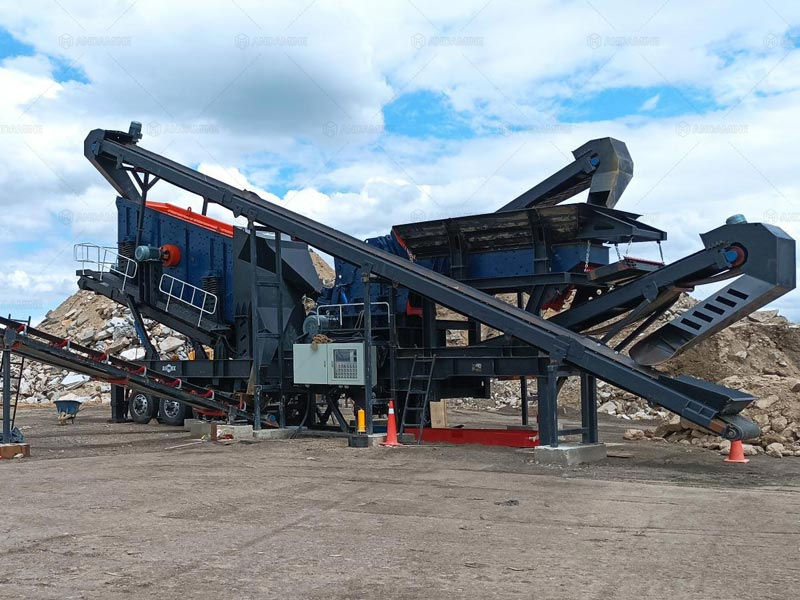
A tailings processing plant differs significantly from a traditional hard-rock aggregate crusher plant. The feed material is already fine, so the circuit focuses on classification, washing, dewatering, and potentially light secondary crushing or shaping. The core of the plant might include:
High-Efficiency Classifiers/Screens: To separate the valuable sand fraction from unusable fines.
Attrition Scrubbers: To break down clays and clean particle surfaces.
Dewatering Equipment: Such as thickeners and filter presses to produce a dry, handleable product from slurry, a critical step given Chile's water scarcity. The required rock crusher machine(maquina trituradora de rocas) here is often a tertiary impactor or vertical shaft impactor (VSI) used for shaping and improving the grain structure of the sand, rather than for heavy-duty crushing.
Quality Assurance and Market Certification
Gaining market acceptance is paramount. Rigorous and continuous testing is needed to certify that the tailings-derived aggregate meets national standards (NCh) for concrete, mortar, and road base. Demonstrating consistent quality, stability, and non-reactivity is essential to convince engineers, contractors, and government agencies to specify these materials in projects. This certification process is a key investment that builds the product's credibility and premium value.
The Compelling Value Proposition for Aggregate Enterprises
This venture offers a multifaceted competitive advantage that defines its status as a new growth point.
Access to Low-Cost, Pre-Processed Raw Material
The single largest cost in traditional aggregate production—drilling, blasting, and primary crushing—is largely eliminated. The raw material is essentially "free" or obtained at a very low cost through a partnership or purchase agreement with the mining company, which views it as a liability reduction. This can result in a substantially lower production cost per ton compared to traditional quarrying, even after accounting for beneficiation and dewatering.
Reduced Permitting Hurdles and Faster Time-to-Market
Establishing a new greenfield quarry can take years due to complex permitting, environmental impact assessments (EIAs), and community relations. Setting up a processing plant on an existing, managed tailings deposit often faces a simpler regulatory pathway, as it is framed as an environmental remediation and valorization project. This allows companies to bring a product to market much faster.
A Strong Sustainability Story with Market Premium
In an era where Environmental, Social, and Governance (ESG) criteria are critical, products made from recycled tailings carry a powerful narrative. They represent a circular economy solution, reduce the need for new quarrying, and help solve a historic environmental problem. This sustainability profile can command a market premium, attract tenders with "green" requirements, and build a superior brand image compared to conventional aggregate suppliers, even those offering a standard stone crusher price in Peru(chancadora de piedra precios Perú) or elsewhere.
Challenges and Strategic Considerations
While promising, this model is not without its challenges. Success requires:
High Initial CAPEX: Specialized washing, classification, and dewatering equipment requires significant investment.
Technical Expertise: Deep knowledge in mineral processing and tailings behavior is essential, which may require new talent acquisition.
Market Development: Proactive education and marketing efforts are needed to build trust and specification for the new material.
Partnership Management: Successful models are often built on long-term, transparent partnerships with mining companies, sharing risks and benefits.
Conclusion: Pioneering a Sustainable and Profitable Future
The treatment of Chilean mineral tailings is no longer just an environmental imperative; it has matured into a sophisticated and lucrative business model for the aggregate sector. It represents a paradigm shift from pure extraction to urban mining and resource circularity. For Chilean aggregate enterprises, it offers a path to differentiate, secure a strategic raw material source, and build a future-proof business aligned with global sustainability trends. As technology in tailings processing advances and market acceptance solidifies, this niche is poised to move from a novel growth point to a mainstream pillar of the nation's construction materials industry. It demonstrates that the next chapter of Chile's mining story may not lie in digging new holes, but in intelligently repurposing the legacy of the old ones, creating value from what was once considered waste.


Comentarios