
How Technological Upgrades Affect the Price Structure and Return on Investment of Concrete Batching Plants
- Aimix maquina

- 5 nov 2025
- 4 Min. de lectura
In the modern construction industry, efficiency, precision, and sustainability have become the key factors shaping purchasing decisions for production equipment. Across Latin America — particularly in Chile — construction companies are investing in more advanced batching systems to stay competitive. However, the adoption of new technologies has also changed how buyers evaluate costs and long-term benefits. Understanding how technological upgrades influence the concrete batching plant price(planta dosificadora de concreto precio) and overall return on investment (ROI) is essential for companies planning to modernize their production capabilities or expand their operations with mobile and modular solutions.

The Evolving Cost Structure of Modern Concrete Plants
Technological innovation has redefined what goes into the total cost of owning and operating a concrete plant. While traditional plants were largely mechanical, today’s systems integrate sensors, automation, and digital control platforms that significantly improve performance but also influence upfront and operational costs.
1. Initial Investment vs. Long-Term Savings
Modern batching plants equipped with intelligent weighing systems, automated controls, and energy-efficient components often come with a higher initial price tag. However, these upgrades deliver measurable long-term savings through reduced energy consumption, less material waste, and minimal downtime.
For example, a mobile concrete plant(planta de hormigon movil) with automatic calibration and mix adjustment can cut operational errors by up to 30%, leading to consistent quality and less rejection on-site. Although the initial concrete batching plant price might be 10–20% higher than that of a basic manual model, the overall lifecycle cost is usually lower due to efficiency gains and extended component life.
2. Digital Systems and Smart Control Integration
One of the biggest drivers of cost variation today is the integration of smart technologies. Many suppliers now include SCADA systems, real-time data monitoring, and IoT-enabled maintenance alerts in their equipment packages. These features allow operators to optimize batch cycles, reduce idle time, and track production remotely.
In regions like Chile, where logistics and quality control are key to infrastructure success, such upgrades are becoming indispensable. Buyers comparing options should note that while automation raises the initial investment, it also shortens the payback period through reduced labor requirements and improved process reliability.
Comparing Stationary and Mobile Plants from an ROI Perspective
When assessing the financial performance of a concrete plant, it’s important to match the technology level with the project type and duration. Both stationary and mobile concrete plants can deliver solid ROI, but their cost structures and efficiency profiles differ.
1. Stationary Plants for High-Volume, Long-Term Projects
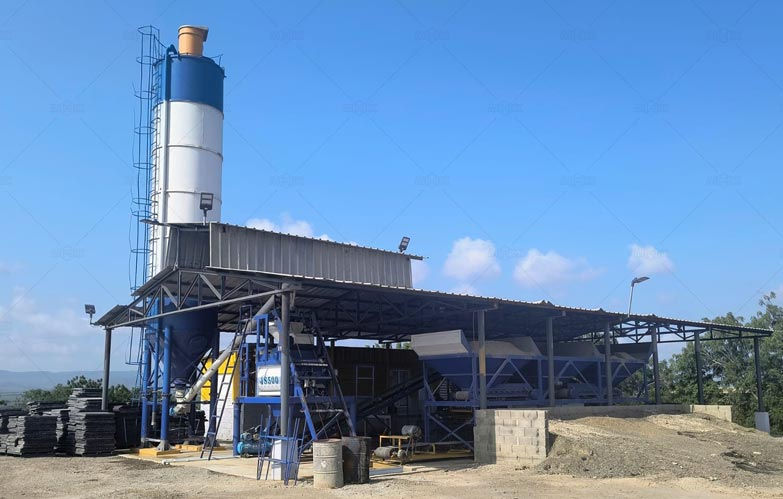
Stationary plants are ideal for continuous, high-capacity operations such as large-scale infrastructure, industrial, or urban projects. They generally have higher setup costs due to foundation work, electrical installation, and material handling systems. However, when equipped with intelligent batching technology, they achieve excellent cost efficiency through high throughput and low production variance.
For a contractor in Chile, where large infrastructure projects are common, a technologically advanced stationary concrete plant may yield ROI within 12 to 18 months, especially when operating at full capacity with minimal downtime.
2. Mobile Plants for Flexible and Remote Operations
In contrast, mobile concrete plants are designed for portability and fast deployment. Their compact layout allows easy transport and setup in remote or mountainous areas — a crucial advantage for Chile’s diverse topography.
While mobile plants usually have lower production capacity compared to stationary models, their flexibility often leads to faster ROI. The elimination of transportation costs for ready-mix concrete and the ability to relocate between projects enhance their economic value.
Technological upgrades such as prewired modules, integrated water recycling systems, and automatic aggregate feeding further reduce setup time and operational costs. This means a modern mobile concrete plant can start generating returns within months after deployment.
Key Technological Features That Influence Plant Pricing
The concrete batching plant price depends largely on the technologies integrated into the system. Here are several critical features that impact both cost and performance:
1. Automated Weighing and Mixing Systems
Automated systems ensure precise material proportioning, reducing waste and improving concrete quality. They are especially valuable in projects with strict strength and durability requirements. While they add to the initial cost, the savings on cement and admixtures can be substantial over time.
2. Energy-Efficient Components
Energy-efficient motors, frequency converters, and smart power management systems help reduce electricity consumption by 15–25%. For high-production plants, these savings quickly offset the higher purchase price.
3. Intelligent Maintenance and Diagnostics
Modern concrete plants in Chile(planta de hormigón chile) increasingly feature predictive maintenance tools that alert operators before mechanical failures occur. This reduces unexpected downtime, lowers repair costs, and extends component life — improving ROI over the equipment’s lifecycle.
4. Eco-Friendly and Water Recycling Systems
Sustainability-focused upgrades, such as wastewater recycling or dust suppression systems, not only meet environmental regulations but also save on material and disposal costs. In the long run, they contribute to a more sustainable operation and a positive corporate image.
ROI Calculation and Payback Scenarios
A practical ROI assessment must consider both direct and indirect benefits. Direct savings come from reduced energy use, fewer labor hours, and lower maintenance costs. Indirect gains include improved concrete quality, reduced rework, and increased project capacity.
For instance, a construction firm operating a mobile concrete plant across multiple Chilean regions may recover its investment within one year by saving on transportation and setup costs alone. A stationary, high-capacity concrete batching plant with full automation may take slightly longer but will deliver higher overall profitability through volume production and long-term durability.
Future Outlook: The Shift Toward Smart and Sustainable Batching
As the Latin American construction market becomes more digitalized, the focus will continue to shift toward integrated automation and sustainability. Buyers will increasingly prioritize plants that combine technological sophistication with flexible configurations.
In Chile, government-backed infrastructure expansion and stricter quality standards are encouraging contractors to adopt advanced production systems. As a result, the market trend suggests that while upfront costs for new-generation plants may continue to rise slightly, ROI periods will shorten due to improved reliability, productivity, and resource efficiency.

Conclusion
Technological upgrades are redefining the economics of concrete production. From intelligent controls and predictive maintenance to energy-efficient systems and modular mobility, these innovations are reshaping how contractors evaluate the concrete batching plant price and profitability.
Whether investing in a stationary setup or a mobile concrete plant, understanding the cost-benefit relationship of each technological feature helps buyers make informed, long-term decisions. For companies operating in competitive markets such as Chile, embracing advanced batching technologies is not merely a cost — it is a strategic investment in efficiency, quality, and sustainability.


Comentarios